
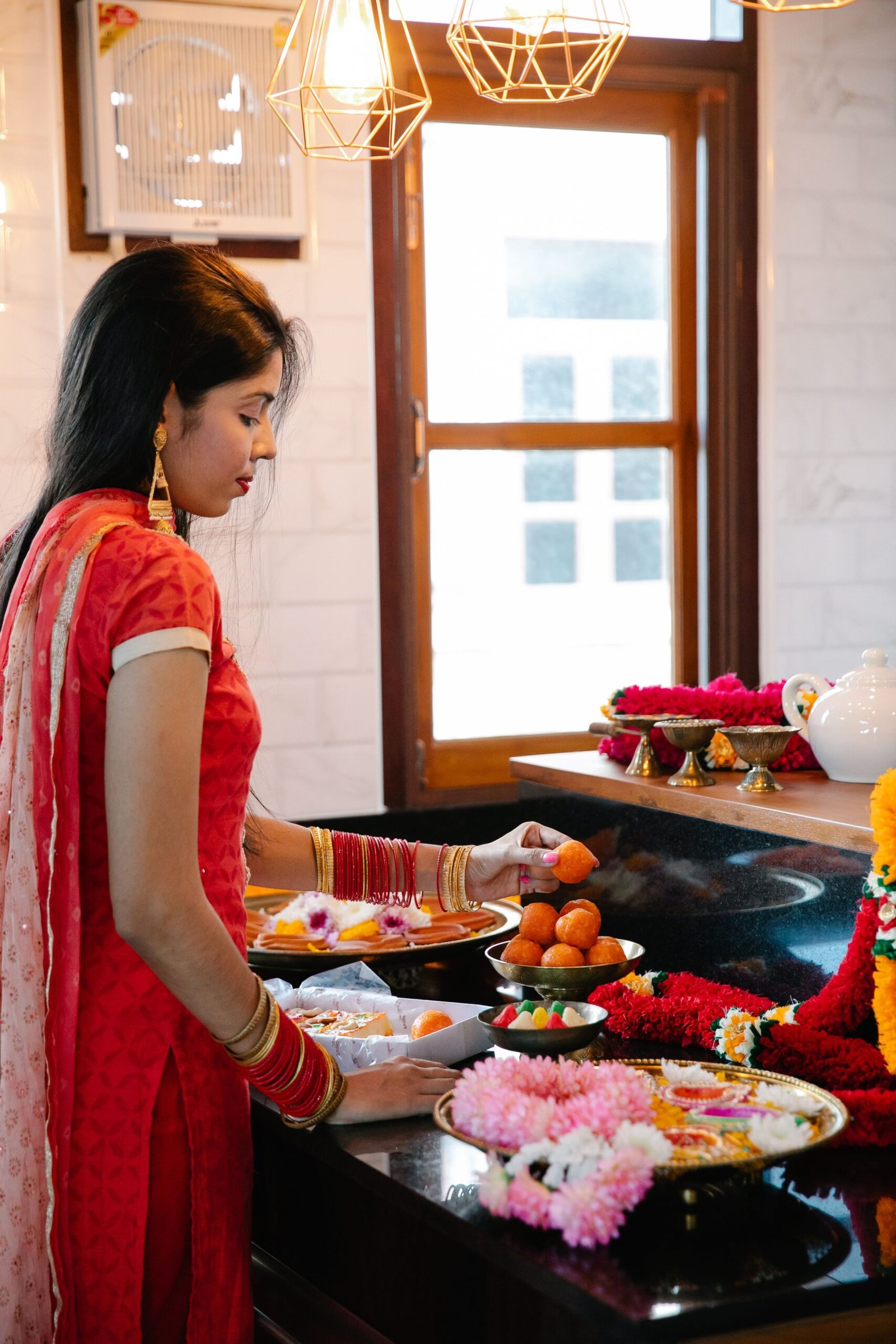
In most Indian homes, the pooja room is the quietest and most personal space in the house. It is where the day begins with a lit diya and where the family gathers on festival mornings. Yet in modern apartments, it is often the space that gets squeezed into a leftover corner. With a little planning, even a compact area can become a pooja room that feels calm, looks beautiful and works well every day. Here are practical pooja room design ideas for Indian homes of every size.
Start with the Right Location
Many families like to follow Vastu Shastra principles when placing the pooja room. Traditionally, the north-east corner of the home is preferred, with the idols placed so that you face east or north while praying. If that is not possible in your layout, choose a clean, quiet spot away from bathrooms and away from the main walkway.
- Avoid placing the mandir under a staircase or against a shared toilet wall
- Keep it away from the kitchen stove area where smoke and grease build up
- Give it enough clearance so you can sit or stand comfortably in front of it
Pooja Room Design Ideas for Different Spaces
1. A Dedicated Pooja Room
If you have a separate room, use it well. A raised platform, a carved wooden or stone backdrop, built-in storage for pooja items and soft lighting can turn it into a true sanctuary. Bell-hung wooden doors or jaali panels keep it visible yet private.
2. A Wall-Mounted Mandir for Apartments
In 2BHK and 3BHK apartments, a wall-mounted unit saves floor space. A solid wood shelf with a backlit panel and a small drawer below for diyas, agarbatti and matchboxes is often all you need. Our bespoke furniture team can size a unit to fit your exact wall.
3. A Pooja Corner in the Living Room
An open corner with a decorative partition or screen creates a sense of separation without closing the space. Our panels and partitions work well here, especially in CNC-cut wood or metal designs with traditional motifs.
4. A Cabinet-Style Mandir with Doors
If you prefer the mandir to be closed when not in use, a cabinet with folding or sliding doors keeps it dust-free and tidy. Pull-out trays for the aarti plate and a lower shelf for flowers make daily rituals easier.
Choosing Materials for Your Pooja Room
- Solid wood: teak or sheesham gives warmth and a timeless look. Our guide on choosing the right materials for furniture explains how wood compares with plywood and MDF.
- Marble and stone: white marble remains a classic choice for flooring and backdrops because it is easy to clean and stays cool.
- Metal accents: brass bells, jaali and trims add a traditional touch. A PVD-coated finish keeps metal looking bright without frequent polishing.
- Laminates and veneers: a budget-friendly way to get a wood look in apartments.
Lighting That Sets the Mood
Lighting changes the feel of a pooja room more than any other element. Warm white LED strips behind a backlit panel, a small hanging bell lamp and a dedicated spot for the diya create a soft glow. Avoid harsh white tube lights. If you light diyas daily, make sure there is enough ventilation and a heat-resistant surface underneath.
Smart Storage Ideas
- Shallow drawers for agarbatti, camphor, matchboxes and cotton wicks
- A pull-out tray for the aarti thali
- A separate cabinet for festival items such as kalash, torans and decorations
- A small hook or rack for the bell and garlands
- A lined drawer for religious books
Colours and Finishes That Feel Calm
Soft whites, creams, light wood tones and muted golds work well in most homes. In traditional Karnataka and coastal homes, deep wood tones with brass accents give a rich, heritage feel. If you love that style, our article on blending traditional Karnataka aesthetics with modern interiors on the LifeSpace blog has more ideas.
Common Pooja Room Design Mistakes to Avoid
- Making it too small to sit in front of comfortably
- Ignoring ventilation when diyas and incense are used daily
- Choosing glossy finishes that show soot and oil stains quickly
- Forgetting storage, which leads to clutter on the altar
- Placing heavy idols on shelves that are not built to hold the weight
Design Your Pooja Room with LifeSpace
A well-designed pooja room should feel like it was always meant to be part of your home. At LifeSpace Interiors and Decors, we design and build mandirs, partitions and full interiors that respect tradition and suit modern living. Explore our interior design services or get in touch with our team to plan yours.