
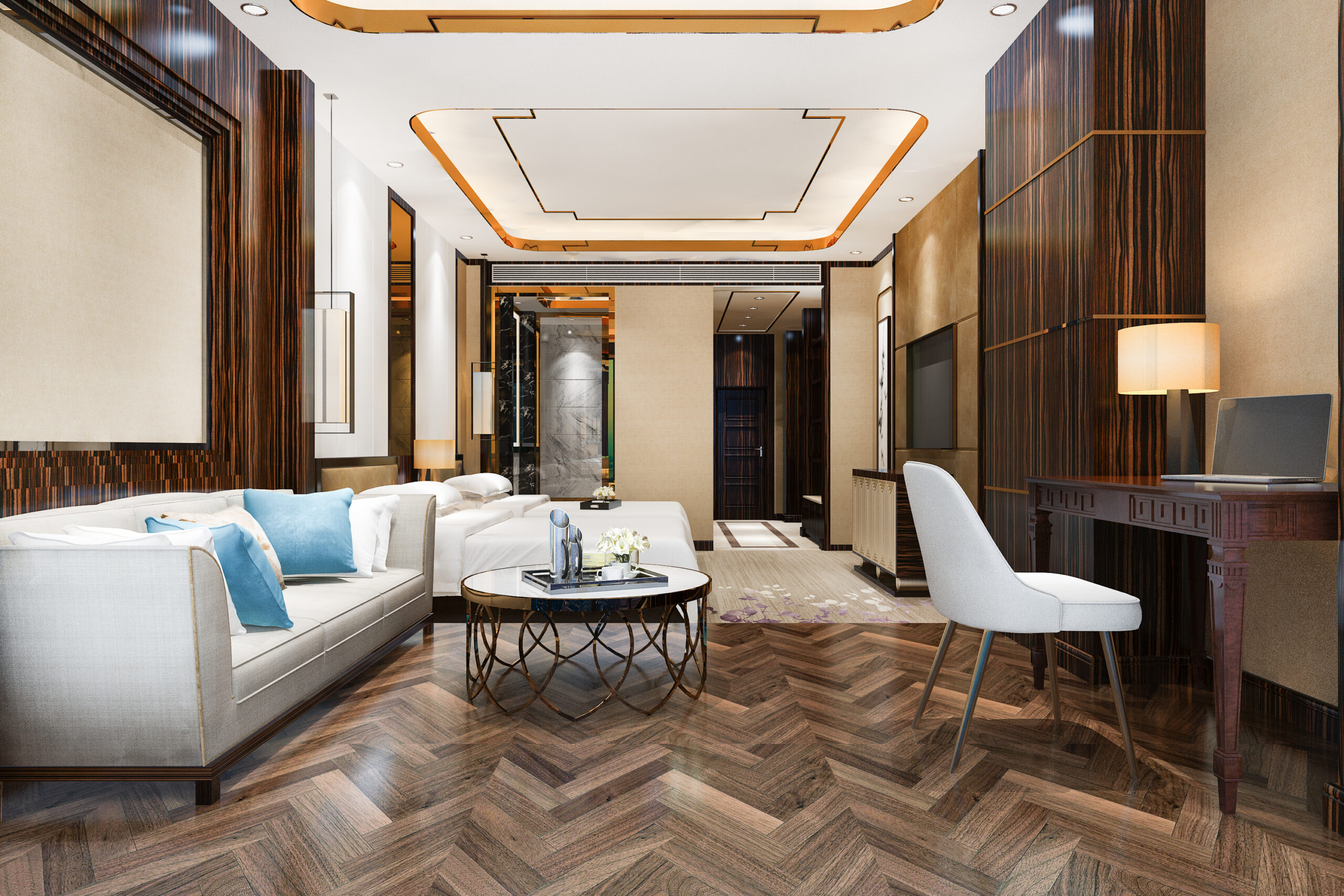
There’s a version of every interior project that looks finished and a version that looks exceptional. The difference between them is rarely the big decisions. It’s not the layout, the furniture selection or even the colour palette. By the time a project reaches the final stage, those decisions have already been made and their impact is largely set. What separates a good interior from a great one is what happens in the last ten percent of the project, the finishing touches that most people don’t think about until they’re standing in the completed space wondering why it doesn’t quite feel the way they imagined it would.
Premium finishing touches are not about spending more money for the sake of it. They’re about the details that a trained eye notices immediately and an untrained eye feels without being able to name. A room can have beautiful furniture, quality materials and a considered colour palette and still feel somehow incomplete. Almost always, the reason is one or more of these finishing elements being absent, underspecified or not thought through carefully enough.
At LifeSpace Interiors & Decors, the finishing stage of every project is treated with the same rigour as the design and execution stages, because it’s where the work of everything that came before is either confirmed or undermined.
1. Lighting That Works in Layers
Single-source lighting is the most common finishing mistake in Indian interiors, and it’s one that affects how a space feels every single time it’s used. A ceiling light that’s either on or off gives you one version of the room regardless of the time of day, the mood or the activity happening in the space. It flattens everything it touches, removes shadow and depth and makes even the most carefully designed interior look flat.
Layered lighting transforms this entirely. The principle is simple: every room needs at least three types of light working together. Ambient light provides the base level of brightness that allows the room to function. Accent light draws attention to specific surfaces, objects or architectural features and creates depth through deliberate contrast. Task light handles functional needs at specific locations, a reading chair, a kitchen countertop, a bathroom mirror.
The quality of the light sources matters as much as their placement. Warm white LEDs in the 2700K to 3000K range create the kind of light that makes people and materials look their best. Cool white or daylight LEDs above 4000K create clinical, unflattering light that works in utility spaces but undermines the atmosphere of a living area or bedroom.
Dimmer controls turn a layered lighting system into a genuinely versatile tool. The ability to bring the ambient light down and let the accent lighting carry the room in the evening is the difference between a space that works for both daily life and entertaining and one that only works for one.
At LifeSpace Interiors & Decors, lighting design is integrated into every project from the planning stage as part of our turnkey execution service, not specified after the fact when the walls are already closed. See how our turnkey projects handle lighting and finishing across every room from the initial design brief through to final handover.
2. Hardware That Elevates Every Surface It Touches
Hardware is the jewellery of an interior. Handles, knobs, hinges, hooks, towel bars, cabinet pulls, tap fittings and door hardware are touched dozens of times a day by everyone in the household. They’re also among the first things a visitor’s eye lands on when they move through a space, often without the visitor consciously registering why a room feels premium or why it doesn’t.
Cheap hardware is immediately identifiable even to people who can’t articulate why. It’s slightly too light in the hand. The finish looks applied rather than inherent. The movement of a door or drawer doesn’t feel smooth or controlled. Over time it tarnishes, chips or simply fails to function as it did when new.
Quality hardware from brands like Hettich, Hafele and Ebco behaves differently in every one of these measures. The weight and feel communicate quality before a conscious evaluation has been made. The finish, whether brushed brass, matte black, satin nickel or polished chrome, looks consistent and holds up under daily use for years. The mechanical performance of hinges, drawer runners and lift-up systems remains smooth and precise long after installation.
The choice of hardware finish also has a significant impact on how a space reads as a whole. A consistent hardware finish across an entire room, matching the cabinet pulls to the tap fittings to the towel bar to the light switch plates, creates a coherence that elevates the entire space. Mismatched hardware across a room tells a different story, one of decisions made separately rather than as part of a considered whole.
Explore our furniture and decor projects to see how hardware selection is integrated into the overall material direction of every space we design and fit out.
3. Wall Treatments That Go Beyond Paint
Paint is the default wall treatment in most Indian interiors, and there’s nothing wrong with that. A good quality paint in a well-chosen colour applied with proper surface preparation and the right finish is a perfectly valid wall treatment. But it’s also the minimum. In rooms where the walls are a significant part of the spatial experience, paint alone rarely delivers the depth, texture and visual interest that a premium interior requires.
Wall treatments that go beyond paint fall into a few distinct categories, each with its own character and appropriate context.
Microplastering creates a seamless, continuous surface in a range of finishes from matte to high gloss. It eliminates the grout lines and visual interruptions of tiles, works in both wet and dry areas and has a material quality that paint simply cannot replicate. For bathrooms, kitchen splashbacks or feature walls in living areas, microplastering delivers a finish that reads as genuinely luxurious. Read our detailed guide on microplastering to understand where and how it works best in a residential interior.
PVD-finished wall panels and cladding bring a metallic or high-gloss surface to walls in ways that work particularly well in hospitality-influenced residential spaces, feature walls behind beds or in entrance lobbies.
Textured plaster finishes add depth and tactile quality to walls in living rooms and bedrooms, creating surfaces that catch light differently throughout the day and add a warmth that flat paint cannot.
Timber wall panelling, whether in solid wood, veneer or high-quality laminate, brings natural warmth and acoustic softness to a space. A panelled feature wall behind a sofa, a bed or a television unit anchors the room and gives it a solidity that paint alone never achieves.
The choice of wall treatment should be driven by the room’s purpose, the quality of light available and the material direction of the rest of the space. In every case, the wall treatment should feel intentional rather than decorative.
4. Custom Joinery With Considered Details
Mass-produced furniture and joinery is designed to work in the average room for the average household. Your home is neither of those things, and the places where standard solutions don’t quite fit, the awkward corner, the ceiling height that doesn’t match standard wardrobe dimensions, the alcove that would be perfect for a built-in bookshelf, are exactly where custom joinery makes the difference between a space that looks designed and one that looks assembled.
But the gap between good custom joinery and great custom joinery isn’t just about fitting the space. It’s about the details within the joinery itself. The profile of a cabinet door edge. The way a shelf is supported, visually light or deliberately structural. The choice of backing material inside a bookcase. The internal finish of a wardrobe. The reveal between a drawer front and the cabinet frame. These details are invisible to most people in the sense that they can’t name them, but they’re felt immediately as the difference between something that looks professionally made and something that looks homemade.
At LifeSpace Interiors & Decors, custom wooden furniture is designed and executed with these details considered from the beginning rather than resolved during production. Every piece of joinery is visualised in 3D before production begins, which means the client sees exactly how the finished piece will look and the proportions, profiles and details are confirmed before a single board is cut. Read more about how custom wooden furniture transforms a space and why it consistently outperforms ready-made alternatives on every measure that matters.
5. Styling That Completes the Space
The styling layer is the final finishing touch and the one most often underestimated or left entirely to chance. It’s the layer of cushions, throws, rugs, artwork, plants, books, ceramics and objects that sits on top of the architecture and furniture and makes a space feel inhabited rather than installed.
The distinction matters because a room with beautiful architecture, quality materials and well-made furniture can still feel like a showroom if the styling layer is absent or poorly considered. Conversely, a room with modest architecture and budget-conscious furniture can feel genuinely warm and personal when the styling is done with care and intention.
Good styling is not the same as decoration. Decoration adds objects to a space. Styling considers how those objects relate to each other, to the surfaces they occupy, to the light that falls on them and to the overall material and colour direction of the room. It’s the difference between a collection of things and a considered composition.
A few principles that hold up consistently in residential styling: odd numbers work better than even numbers in groupings. Varying heights within a group creates visual interest that a flat arrangement of similar-height objects cannot. Every grouping needs a range of scale, one large anchor object, one or two medium pieces and a smaller detail element. Negative space, the areas deliberately left empty, is as important as the objects themselves.
Artwork deserves particular attention as a finishing element. A well-chosen piece of artwork on the right wall at the correct height and scale has more impact on how a room feels than almost any other single element. Artwork hung too high, too small for the wall or chosen without reference to the rest of the room’s colour and material direction is a missed opportunity that’s immediately visible even to people who aren’t sure what’s wrong.
Plants bring something into a space that no manufactured object can replicate: the sense of something living. A well-placed indoor plant, correctly sized for the corner or surface it occupies and healthy enough to look genuinely cared for, adds warmth, scale and organic character to a room that even the best furniture cannot fully provide.
At LifeSpace Interiors & Decors, our furniture and decor curation service covers the styling layer as part of a complete interior rather than treating it as an afterthought once the construction and joinery work is done. We source and specify decor pieces that work with the overall design direction of the project, ensuring the finished space looks complete rather than designed to a point and then left for the client to fill in. Contact our team to discuss how our end-to-end service covers every layer of the interior from the structural decisions through to the final styling.
Conclusion
The finishing touches that separate good interiors from great ones are not mysterious or inaccessible. They’re specific, learnable and achievable at a range of budgets when they’re planned for from the beginning rather than added as an afterthought. Layered lighting, quality hardware, considered wall treatments, custom joinery with genuine detail and a thoughtful styling layer each contribute something that the rest of the interior cannot compensate for if it’s missing. Together they’re what makes a space feel genuinely complete, the kind of space that impresses visitors immediately and feels better to live in every single day. At LifeSpace Interiors & Decors, these finishing elements are part of every project we take on, because good design deserves to be finished properly.
To explore our full range of residential and commercial interior services, visit our Services page or browse our completed design and turnkey projects to see how every finishing detail comes together in the spaces we deliver.
For further reference on premium interior finishing standards, Hafele India’s product and finishing guide is one of the most comprehensive resources available for hardware and surface finishing in residential and commercial interiors. Architectural Digest India regularly features finished interiors where the quality of these details is evident and worth studying for anyone planning a premium residential project.