
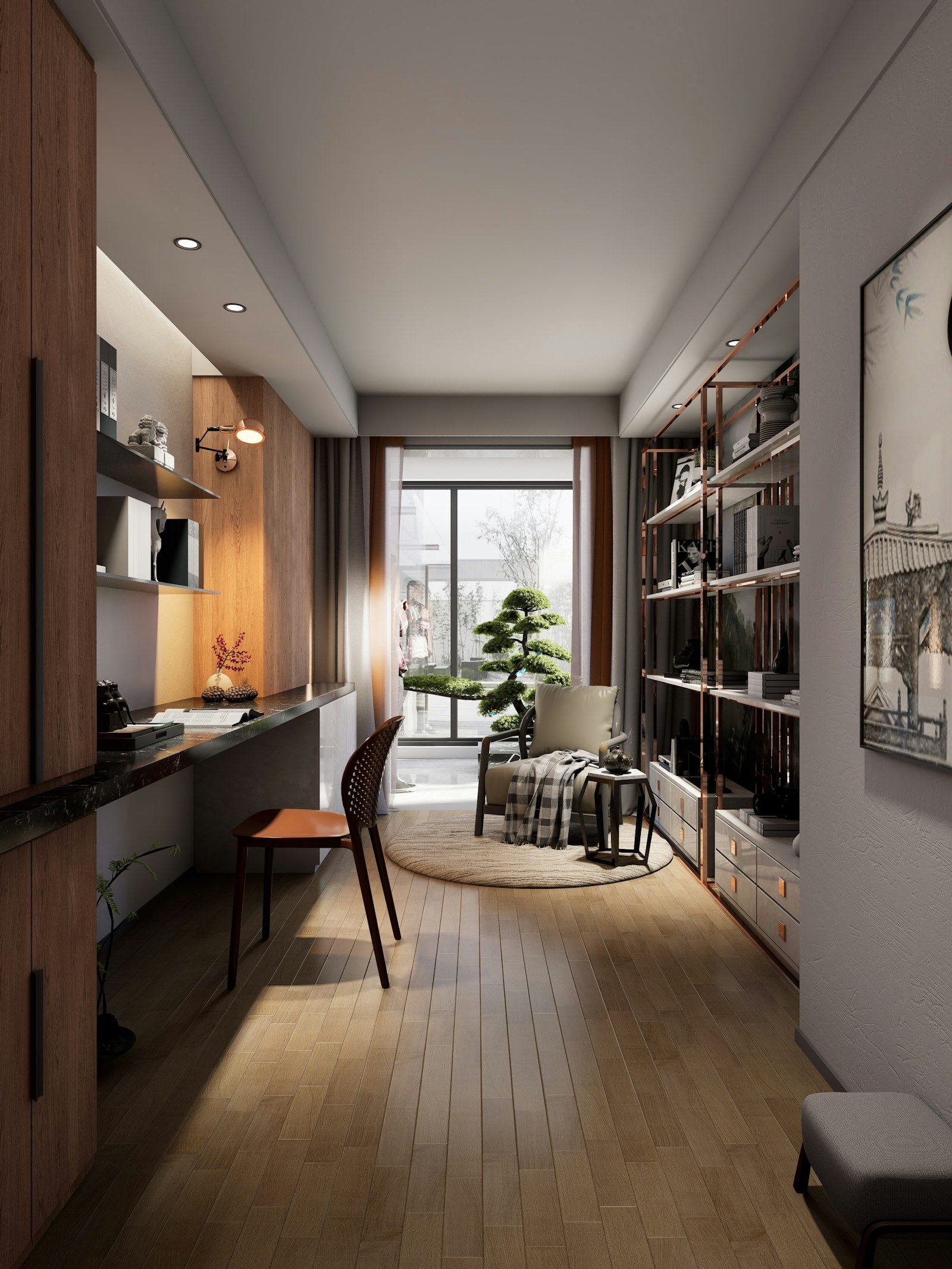
Working from home is no longer a temporary arrangement for many Indian families. Whether you run a business, work for a company or simply need a quiet place for study and paperwork, a good home office makes a real difference to focus and comfort. You do not need a spare room to get it right. A thoughtful corner can work just as well. Here are practical home office design ideas for Indian homes.
Start With How You Actually Work
- How many hours a day will you sit at the desk?
- Do you take video calls, and do you need a clean backdrop?
- Do you work with papers, files or a laptop only?
- Will anyone else use the space, such as children for homework?
The answers decide the size of the desk, the storage you need and where the space should sit in the home.
Choose the Right Spot
- A spare bedroom: best for privacy and long working hours.
- A corner of the bedroom: works well if you keep a compact desk and a closed storage unit.
- A balcony or a window nook: brings natural light, but needs protection from heat and rain.
- A niche in the living room: suits light work, and a fold-away desk keeps the room tidy. Our guide on open plan versus closed rooms helps you decide how to separate zones.
Pick a Desk and Chair That Suit You
- A desk about 120 to 150 cm wide suits most laptop users.
- An L-shaped desk is good if you use a monitor and need extra space for papers.
- Choose a chair with proper back support. It matters more than the desk.
- Keep your screen at eye level and your feet flat on the floor.
Plan the Lighting Carefully
- Place the desk so that daylight comes from the side, not from behind the screen.
- Add a warm task light for evenings.
- Use soft ambient lighting so the room does not feel harsh. See false ceiling design ideas for Indian homes for ways to build lighting into the ceiling.
- Avoid shiny surfaces that reflect glare on to your screen.
Smart Storage Keeps the Space Calm
- Use wall mounted shelves to free up floor space.
- Choose closed cabinets for files and chargers so the room feels tidy on video calls.
- Add drawers under the desk for stationery and small items.
- Plan cable management early, with a hole in the desk and a power strip fixed underneath.
The same principles of clever storage apply across the home, as shown in our article on how to maximise storage in a small Indian kitchen.
Colours and Materials That Help You Focus
- Soft neutrals, muted greens and warm greys are easy on the eyes.
- Use one accent colour, such as a painted wall or a notice board, to add energy.
- Choose matte finishes for desks to reduce glare.
- Add a small plant for freshness and a sense of calm.
Need help with combinations? Read how to pick the right colour palette for every room.
Think About Sound and Privacy
- Choose a spot away from the kitchen and the television.
- Soft furnishings such as curtains, rugs and fabric panels reduce echo.
- A door or a sliding partition helps when you need quiet, and the same idea is explained in our comparison of sliding and hinged doors.
Design for Joint Families
In a home with several generations, the home office often doubles as a study or a quiet reading corner. Plan flexible furniture so it serves everyone, as discussed in designing a home that works for three generations.
Common Mistakes to Avoid
- Placing the desk where the screen faces a bright window.
- Skipping a proper chair to save money.
- Leaving wires loose and visible.
- Using the bed as a desk for long hours.
- Ignoring power points, which should be planned before the furniture.
Plan Your Home Office With LifeSpace
A home office should match your work, your space and your budget. The LifeSpace team designs workspaces together with the rest of the home so everything feels connected. Explore our interior design services or contact us to plan yours.