
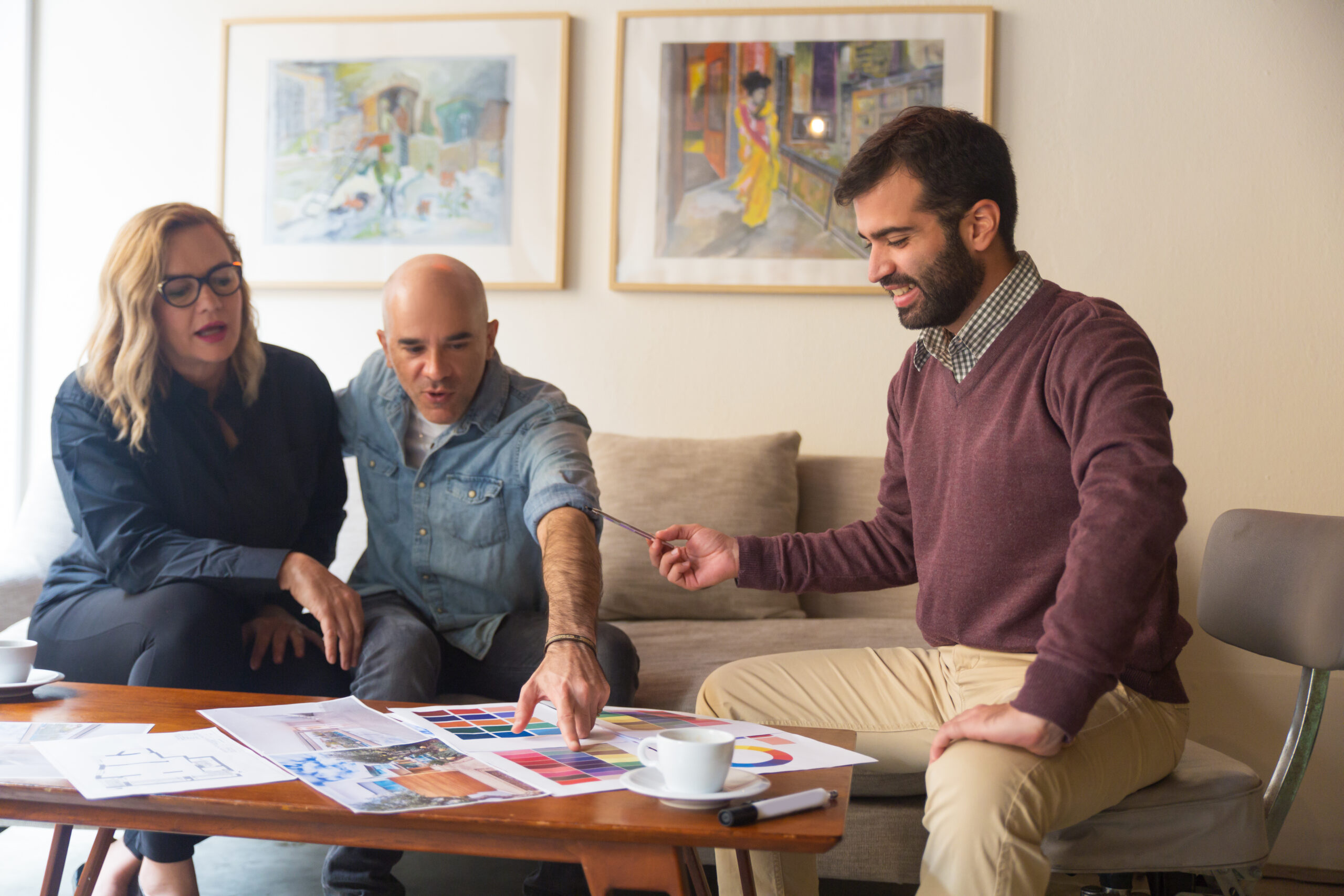
Most homeowners who book an interior design consultation for the first time don’t know what to expect from it. They arrive with a vague sense that they want help with their home, a phone full of reference images and a budget figure they’re not sure how to frame. The designer asks questions they hadn’t anticipated. The conversation covers things they hadn’t thought about. And at the end of an hour they leave either energised and clear about the next steps or slightly confused about what just happened and what, if anything, they’ve committed to.
The quality of an interior design consultation depends on two things equally: the preparation the client brings to it and the structure the designer brings to it. A client who arrives having thought carefully about what they need, what they’re working with and what they want to achieve gets significantly more from the same hour than one who arrives hoping the designer will figure all of that out for them. And a designer who runs a structured consultation that covers the right ground in the right order produces a client who leaves with clarity rather than more questions than they arrived with.
This guide covers what an interior design consultation is, what it should include, what a good one looks like and what you should walk away from it with. Whether you’re approaching your first consultation or you’ve had one that left you uncertain about its value, understanding what the conversation should achieve is the most useful preparation you can do.
At LifeSpace Interiors & Decors, the initial consultation is the foundation of every project we take on, because the quality of the brief that emerges from that first conversation determines the quality of everything that follows.
What an Interior Design Consultation Is
An interior design consultation is a structured conversation between a homeowner or client and an interior design professional, the purpose of which is to establish the brief for a design project. It is not a design session. The designer does not produce designs during the consultation. It is not a quote. The consultation is not the point at which costs are finalised. And it is not a sales pitch, although the client is naturally evaluating the designer as much as the designer is evaluating the project.
What a consultation is, when it’s done well, is the process of translating a client’s needs, aspirations, lifestyle, constraints and preferences into a design brief clear enough for a professional to work from. It is also the process by which the client and designer establish whether they can work together effectively, because the relationship between a client and their interior designer is close enough and long enough that a mismatch in communication style, working approach or fundamental values makes for a difficult project regardless of how talented either party is.
A consultation typically lasts between one and two hours for a single room or small project and may extend to a full day for a complete home or large commercial brief. Some designers charge for consultations and some offer an initial consultation without charge as part of their new client process. Neither approach is inherently better than the other, but a consultation that is charged for tends to be taken more seriously by both parties and to produce a more structured and useful outcome.
What the Designer Should Cover
A well-structured interior design consultation covers the following ground, not necessarily in this order and not necessarily with this level of formality, but with enough thoroughness that both parties leave with a complete picture.
The scope of the project is the first thing to establish. Which spaces are being designed? What is the priority order if budget constraints mean not everything can be done simultaneously? Is this a full renovation involving structural changes or a redecoration within the existing structure? The answers to these questions determine what kind of professional expertise the project requires and what the approximate scale of the investment is likely to be.
The client’s lifestyle and how they actually use the spaces being designed is the second essential area. How many people live in the home? What are their ages, routines and habits? How is the main living area used day to day versus when entertaining? Does anyone work from home? Are there children, pets, elderly family members or other specific users whose needs should shape the design? This information is the raw material from which a functional brief is built, and a designer who doesn’t ask these questions is designing for a generic household rather than for the specific family that will live in the space.
The existing conditions of the space matter to the brief in ways that go beyond the dimensions. The quality of natural light, the orientation of the rooms, the condition of existing finishes, the location of electrical points and plumbing connections, the height of ceilings, the presence of architectural features worth preserving or problems worth addressing, all of this shapes what is possible and what will be most impactful within the available budget.
The client’s aesthetic preferences are established through a combination of direct questions and reference images. What styles appeal and what styles don’t? Are there specific materials, colours or finishes that are non-negotiable in either direction, must-haves or absolute exclusions? Is the aesthetic direction established and specific, or is the client open to the designer’s creative interpretation within a broad direction?
The budget is a conversation that most designers and clients approach with some mutual discomfort. Clients are often reluctant to name a number for the reasons discussed in our guide on briefing your interior designer. Designers are often reluctant to push too hard on a figure the client is clearly uncomfortable sharing. But the budget conversation is the one that makes every other conversation meaningful, because a design that can’t be built within the available budget is not a design, it’s an aspiration. A good designer frames the budget conversation constructively: not as a constraint that limits the design but as the parameter that focuses it.
What You Should Prepare Before the Consultation
The value you get from an interior design consultation is directly proportional to how well prepared you are for it. A client who arrives with clear information and honest answers gets a clearer and more useful brief from the same hour than one who arrives intending to let the designer lead entirely.
Before your consultation, take the time to think through and write down the following. The spaces you want help with, listed in priority order. The specific problems each space has currently, functional problems, aesthetic problems, storage problems or spatial problems. The lifestyle information about how you and your household actually use each space. The budget you are genuinely willing to invest, not the number you’re prepared to open with but the real figure. And a selection of reference images, ten to twenty is enough, that represent something about what you’re drawn to, whether that’s a specific style, a specific material, a quality of light or a type of atmosphere.
Also think about what you want to walk away from the consultation with. What would make this conversation feel like it was worth your time? If you can answer that question before you go in, you can ask the designer directly whether they’re likely to be able to give you that by the end of the session.
What You Should Walk Away With
A well-run interior design consultation produces specific outputs, not just a pleasant conversation and a general sense of direction. By the end of a good consultation you should have a clear understanding of the following.
Whether the designer is the right fit for your project. This is a judgment that goes beyond their portfolio and their technical capability to include how they communicate, whether they listened as much as they talked, whether they asked the questions that gave them a genuine understanding of your life and your needs and whether you felt understood by them rather than processed through a standard intake conversation.
A realistic picture of what your budget can achieve. Not a detailed quote, which requires more information than a consultation can cover, but an honest framing of the scope and quality of outcome your investment is likely to deliver and where the significant trade-off decisions are likely to fall.
A clear next step. Whether that’s a follow-up site visit, a design proposal, a more detailed brief document or a decision about whether to proceed with this designer at all, there should be a specific agreed action that comes out of the consultation. A conversation that ends with a vague mutual sense that both parties will be in touch is a conversation that has not been concluded properly.
A sense of the process the designer follows. How do they work from brief to design? What does their design process look like? How do they handle revisions? How do they manage the transition from design to execution? How do they communicate with clients during a project? The consultation is the right time to ask all of these questions and to evaluate the answers honestly.
At LifeSpace Interiors & Decors, our initial consultation covers all of the ground above as a structured process rather than an open-ended conversation. Every client who comes to us for a consultation leaves with a clear understanding of the scope we’ve agreed, the budget parameters we’ve discussed, the next steps in the process and whether our approach is the right fit for their project. Contact our team to schedule an initial consultation and we will prepare for it with the same rigour we bring to every stage of our design and execution process.
The Difference Between a Good Consultation and a Bad One
A bad interior design consultation is one where the designer talks more than they listen, presents their portfolio without asking enough questions about what the client specifically needs, gives vague or evasive answers about budget and process and leaves the client with no clearer sense of direction than they arrived with. It is also one where the client arrives without preparation, expects the designer to intuit their needs without providing the relevant information and treats the consultation as a test to be passed rather than a conversation to be had.
A good consultation is one where the designer asks more questions than they answer, demonstrates a genuine interest in understanding the specific household rather than fitting the client into a standard design category and is honest about what is and isn’t achievable within the constraints of the project. It is also one where the client has prepared the information the designer needs, is honest about budget and constraints and treats the conversation as a collaboration rather than an interrogation.
The quality of the consultation predicts the quality of the project. A designer who runs a superficial consultation will design for a generic client. A designer who runs a thorough consultation will design for you specifically. The difference in the outcome is significant and visible in the finished space.
Red Flags to Watch for in a Consultation
A few specific behaviours in a consultation are worth treating as warning signs regardless of how impressive the designer’s portfolio is.
A designer who avoids the budget conversation entirely or dismisses it as something to worry about later is not giving you honest guidance. Budget shapes every design decision and a designer who won’t engage with it is either unwilling to have a difficult conversation or is planning to present a design that will require a significantly larger budget than you’ve indicated.
A designer who presents a strong design direction before understanding how you live is designing for themselves rather than for you. A beautiful design that doesn’t fit how you actually use your home is not a good design for your home, regardless of how much it might be admired by someone else.
A designer who can’t clearly explain their process, how they move from brief to design, from design to execution and from execution to handover, is not running a structured enough operation to manage a complex project reliably.
A designer who responds to all your preferences with enthusiasm and no challenge is telling you what you want to hear rather than what you need to know. A good designer pushes back when a client preference creates a problem they can see and the client can’t, because their professional responsibility is to the quality of the outcome rather than to making the client feel validated at every moment.
How LifeSpace Interiors Approaches the Initial Consultation
At LifeSpace Interiors & Decors, the initial consultation is a structured two-part conversation. The first part is about understanding your project, your spaces, your lifestyle, your preferences and your constraints. The second part is about explaining our process, what you can expect from us at each stage of the project and how we handle the transition from design to execution.
We come to every consultation having reviewed whatever information the client has shared in advance, whether that’s photographs of the existing space, reference images, a rough brief or a set of dimensions. We ask specific questions rather than general ones. We give honest answers about budget and timeline rather than optimistic ones. And we end every consultation with a clear and agreed next step so that neither party leaves uncertain about what happens next.
Our design process begins with 2D and 3D visualization that gives every client a precise picture of their finished space before any execution begins. Explore our design visualization services to understand how this process works as the first concrete output of the design brief established in the consultation.
You can also browse our completed residential and commercial projects to see the standard of work that our consultation-to-completion process consistently delivers.
Conclusion
An interior design consultation is the most important hour in any renovation project. It is the conversation that determines whether the design that follows is genuinely suited to how you live, whether the budget is realistic for what you want to achieve, whether the designer you’re working with is the right fit for your project and whether the process that follows will be managed with the rigour it requires. Getting the most from it requires preparation from the client and structure from the designer. When both of those are in place, the consultation produces a brief clear enough to design from and a relationship confident enough to build a project on. At LifeSpace Interiors & Decors, that is exactly what we aim to produce from every first conversation we have with a new client.
To learn more about our full range of interior design and execution services, visit our Services page or explore our turnkey and PMC project capabilities to see how a well-run consultation translates into a well-managed and well-delivered project.
For further reading on how to prepare for and evaluate an interior design consultation, Architectural Digest India regularly features guidance on working with design professionals across residential and commercial project categories. Asian Paints’ home design resource also covers the process of engaging with interior design professionals for Indian homeowners planning their first significant renovation.